




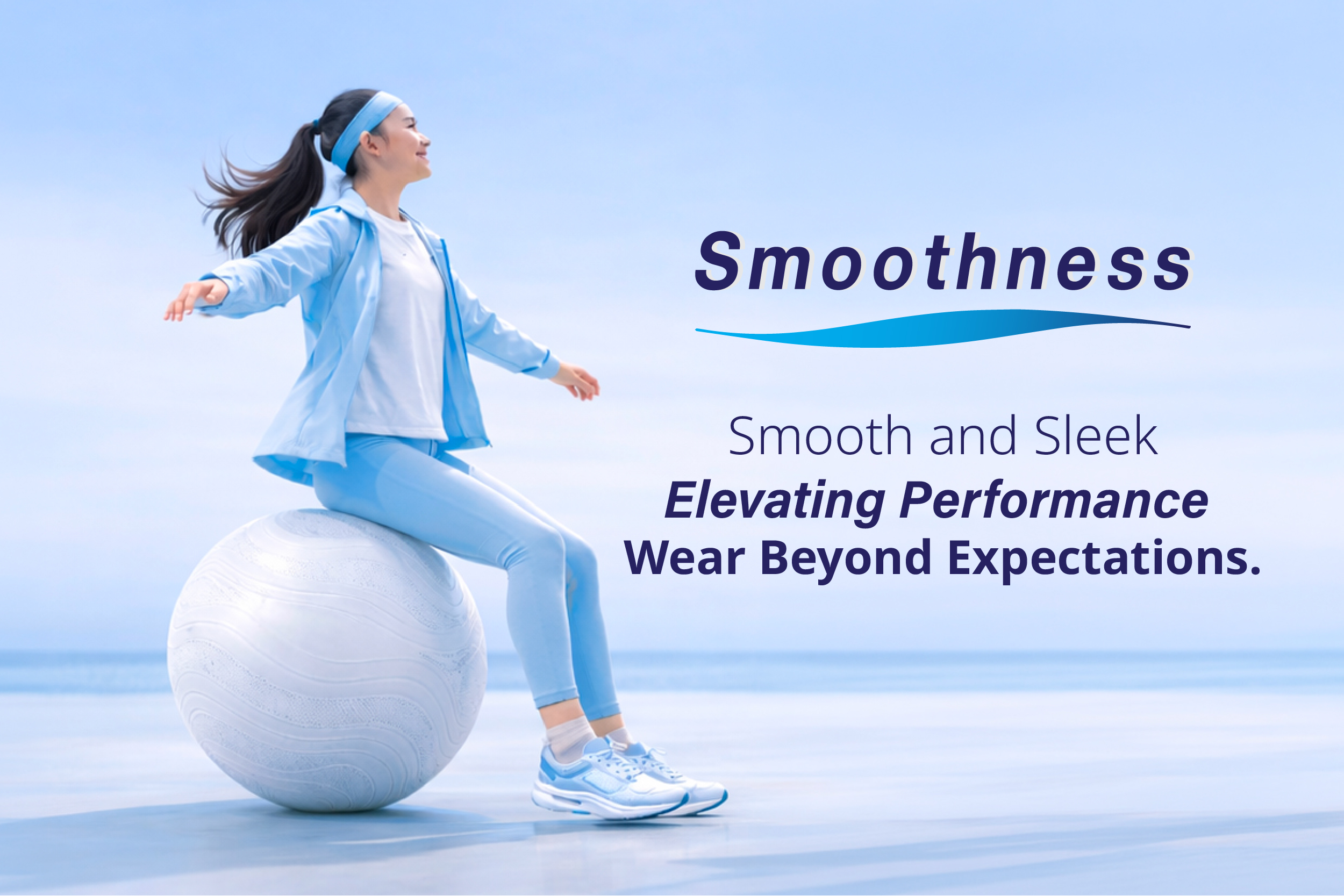
27 Mar Smoothness Smooth and Sleek Elevating Performance Wear Beyond Expectations
Smoothness is a lightweight, smooth fabric developed specifically for sportswear and garments that require a high level of wearing comfort. Its key characteristics include not sticking to the skin, not clinging to the body, and maintaining shape even during continuous movement.
These properties help solve common problems often found in sports apparel, such as fabric sticking to the skin when sweating, friction against the body, or garments that restrict movement. Because of these issues, many apparel brands are now searching for lightweight smooth fabrics that offer greater comfort and performance.
Smoothness was developed to create the right balance between surface smoothness, moisture management, and natural body movement. This makes it ideal for developing sportswear, casual clothing, and everyday garments. For brands seeking fabric manufacturers or OEM apparel factories, Smoothness is also a material that helps elevate product quality and create clear differentiation in the market.
Common Sportswear Problems That Require Smooth Lightweight Fabric
Designing sportswear is not only about style or silhouette. The fabric itself is the most critical element that directly affects wearing comfort and performance.
High-quality sportswear must support natural body movement, provide good ventilation, and avoid discomfort during activity. However, many garments in the market still suffer from fabric-related problems caused by unsuitable material choices.
These issues affect not only comfort but also movement efficiency and the wearer’s confidence during physical activities.
Fabric Clinging to the Skin When Sweating
When the body produces sweat, moisture can cause fabric to cling to the skin. This commonly occurs in areas with frequent movement such as:
- the back
- underarms
- waist area
When fabric sticks too closely to the skin, wearers often feel uncomfortable and restricted in movement. Moisture trapped in the fabric can also create a sticky and unpleasant sensation, significantly reducing overall comfort.
Fabrics with unsuitable structures make this problem more noticeable, especially during high-energy activities such as running, exercise, or sports training.
Fabric Friction Against the Skin
Fabrics with high friction can cause irritation, particularly during long periods of movement such as workouts or outdoor activities.
Friction between fabric and skin may lead to:
- skin irritation or burning sensation
• discomfort during movement
• heat buildup on the skin
For people who wear sportswear for extended periods, this issue can significantly reduce the overall wearing experience.
Clothing That Moves Out of Sync with the Body
Garments made from poorly structured fabrics may not move smoothly with the body. The fabric may pull or restrict movement, making the wearer feel limited during activity.
For sports that require agility such as running, training, or active movement, clothing that cannot move naturally with the body can become a major limitation.
Because of this, many apparel brands are increasingly focusing on smooth, lightweight fabrics with low friction to improve comfort and allow garments to move naturally with the wearer.
Why Sportswear Should Use Smooth, Lightweight Fabrics
Sportswear must support continuous body movement, whether during running, fitness training, workouts, or outdoor activities. During these activities, the body moves in multiple directions while generating sweat and body heat.
If the fabric surface is rough or creates excessive friction, the wearer may experience irritation, discomfort, or restricted movement. These factors directly affect the overall exercise experience.
For this reason, selecting fabrics that are smooth, lightweight, and non-clinging has become one of the most important considerations in modern sportswear design.
Smoothness fabric technology was developed specifically to reduce friction, improve comfort, and allow garments to move naturally with the body.
Reduced Friction Against the Skin
During exercise, the body constantly stretches, twists, and moves in various directions. This causes repeated friction between fabric and skin.
If the fabric is not smooth enough, this friction can lead to:
- skin rashes
• irritation
• heat buildup
• discomfort during movement
Smoothness fabric reduces friction against the skin, allowing the fabric to move smoothly with the body without pulling or causing pressure points.
As a result, wearers experience comfort from the first moment they put on the garment, allowing them to perform activities without distraction.
Moisture Management and Reduced Humidity
Exercise causes the body to produce sweat to regulate temperature. If the garment cannot manage moisture effectively, sweat accumulates on the fabric surface and creates a sticky, uncomfortable feeling.
Smoothness fabrics are designed with Moisture Absorption and Moisture Management properties, allowing sweat to be quickly absorbed and distributed away from the skin.
This helps the wearer feel:
- drier
• less sticky
• more comfortable even in hot climates
• able to continue activities for longer periods
Additionally, efficient moisture management also helps reduce the risk of odor caused by sweat accumulation.
Enhanced Freedom of Movement
A good sports garment should not only look good but also fully support natural body movement without causing restriction.
Sportswear should feel:
- lightweight and non-restrictive
• flexible during movement
• not overly tight against the skin
• breathable and comfortable
Smoothness fabrics allow the material to flow naturally with body movement, ensuring the garment does not restrict mobility.
This is particularly important for activities requiring agility such as:
- running
• sports training
• gym workouts
• outdoor sports
When wearers feel comfortable in their clothing, their movements become more fluid and efficient.
Key Properties of Smoothness Fabric
Smoothness fabric is designed specifically for sportswear and garments that require maximum comfort and performance.
Its core concept focuses on balancing surface smoothness, lightweight construction, and breathability, ensuring comfort both at first touch and during active use.
The fabric structure is carefully engineered through fiber selection, knitting techniques, and fabric construction to deliver comfort, mobility, and premium appearance simultaneously.
Low Friction Surface
One of the defining characteristics of Smoothness fabric is its Low Friction Surface, allowing the fabric to glide smoothly against the skin.
During activities such as running or workouts, the fabric moves naturally with the body without pulling or creating irritation.
This helps:
- reduce skin irritation
• improve movement comfort
• provide a smoother wearing experience
The fabric maintains this comfort in both dry and wet conditions, ensuring consistent performance even during intense activity.
Moisture Absorption
Smoothness fabrics also provide effective moisture management, helping absorb and distribute sweat away from the skin.
This allows moisture to spread across the fabric surface and evaporate quickly, making the wearer feel:
- drier
• more comfortable
• free from humidity during activity
This feature is particularly beneficial in hot climates or high-intensity workouts.
Lightweight Structure
Smoothness fabrics are engineered with a lightweight construction that enhances comfort and mobility.
Lightweight fabrics reduce the feeling of heaviness and allow garments to feel airy and comfortable, especially in sportswear and activewear.
Benefits include:
- all-day comfort
• reduced garment weight
• improved freedom of movement
Despite its lightweight nature, the fabric retains structure and dimensional stability, ensuring garments maintain a clean and refined appearance.
Breathability
Another important property of Smoothness fabric is breathability, which helps regulate body temperature during activity.
Breathable fabrics allow air to pass through easily, helping dissipate heat generated by the body.
This helps reduce:
- heat buildup
• humidity inside the garment
• discomfort during exercise
As a result, wearers experience a cooler, fresher, and more comfortable feeling, enabling them to stay active longer without distraction.
Smoothness vs Conventional Fabrics
Feature | Conventional Fabric | Smoothness Fabric |
Surface Texture | May feel rough with higher friction | Smooth surface that reduces skin friction |
Fabric Structure | May lose shape with use | Balanced structure that maintains shape |
Fabric Weight | Can be heavier or thicker | Lightweight while retaining dimensional structure |
Fabric Drape | May cling or appear stiff | Natural drape that does not cling to the body |
Movement Comfort | Friction may occur during movement | Moves smoothly with the body |
Suitability for Sportswear | Limited performance benefits | Ideal for sportswear and activewear |
Garment Appearance | May wrinkle or lose structure | Clean structure and refined appearance |
What Types of Sportswear Are Suitable for Smoothness Fabric?
Smoothness fabric is ideal for a wide range of sportswear applications, especially garments designed for active movement, comfort, and long wearing periods. The fabric is engineered to provide a smooth surface, lightweight structure, and effective breathability, allowing the wearer to move naturally without discomfort.
Because of its balanced properties, Smoothness fabric is particularly suitable for garments that require a soft touch, lightweight comfort, and breathable performance. These qualities make it a strong choice for modern sportswear as well as apparel that blends athletic functionality with everyday wear.
General Workout Apparel
Smoothness fabric works particularly well for everyday sportswear such as running shirts, fitness tops, yoga wear, and tennis apparel, where comfort and mobility are essential. These activities involve frequent movement, stretching, and body rotation, which can cause friction between the garment and the skin.
With its smooth surface and lightweight construction, Smoothness fabric reduces skin irritation and allows the garment to move naturally with the body. This helps athletes and active individuals stay comfortable during workouts, even during longer training sessions.
Activewear
Activewear combines the comfort of athletic clothing with the practicality of everyday wear. Modern consumers increasingly prefer garments that can transition easily from workouts to daily activities.
Smoothness fabrics are well suited for T-shirts, polo shirts, and training tops designed for both exercise and casual wear. The fabric’s smooth touch and breathable structure help maintain comfort throughout the day, whether the wearer is exercising, commuting, or relaxing.
Training Apparel
Training apparel must withstand constant movement, repeated exercise, and high levels of physical activity. During training sessions, garments are exposed to sweat, friction, and dynamic body motion.
Smoothness fabrics help improve the wearing experience by reducing skin friction and preventing excessive fabric cling during intense workouts. The fabric also maintains comfort even when moisture is present, helping athletes stay focused on their performance.
Teamwear and Sports Uniforms
For team sports and athletic uniforms, comfort, durability, and consistent appearance are all important factors. Players often wear uniforms for extended periods during training, matches, or competitions.
Smoothness fabric enhances airflow and moisture management while maintaining garment structure. This allows uniforms to remain comfortable during activity while also providing a clean, professional appearance suitable for team branding and organized sports environments.
Performance Lifestyle Apparel
Performance lifestyle garments combine fashion aesthetics with athletic functionality, making them suitable for both active and casual environments. These garments are designed for people who want clothing that looks refined while still offering the comfort of performance wear.
Smoothness fabrics contribute to this category by providing a premium smooth texture, lightweight feel, and natural drape. As a result, garments can be worn comfortably for work, travel, or everyday activities while maintaining a modern, performance-oriented look.
Looking for Smoothness Innovation?
With extensive experience in the textile industry and advanced fabric development expertise, Nan Yang Textile Group provides a fully integrated production process—from yarn development and fabric manufacturing to ready-to-wear garment solutions.
This allows brands and manufacturers to develop high-quality sportswear with superior comfort and performance.
If you are looking for fabrics that are smooth, lightweight, breathable, and ideal for sportswear and activewear, Smoothness innovation is available exclusively from Nan Yang Textile Group.
From upstream to downstream, developed by the original innovation team.
For more information, contact us Click here.