




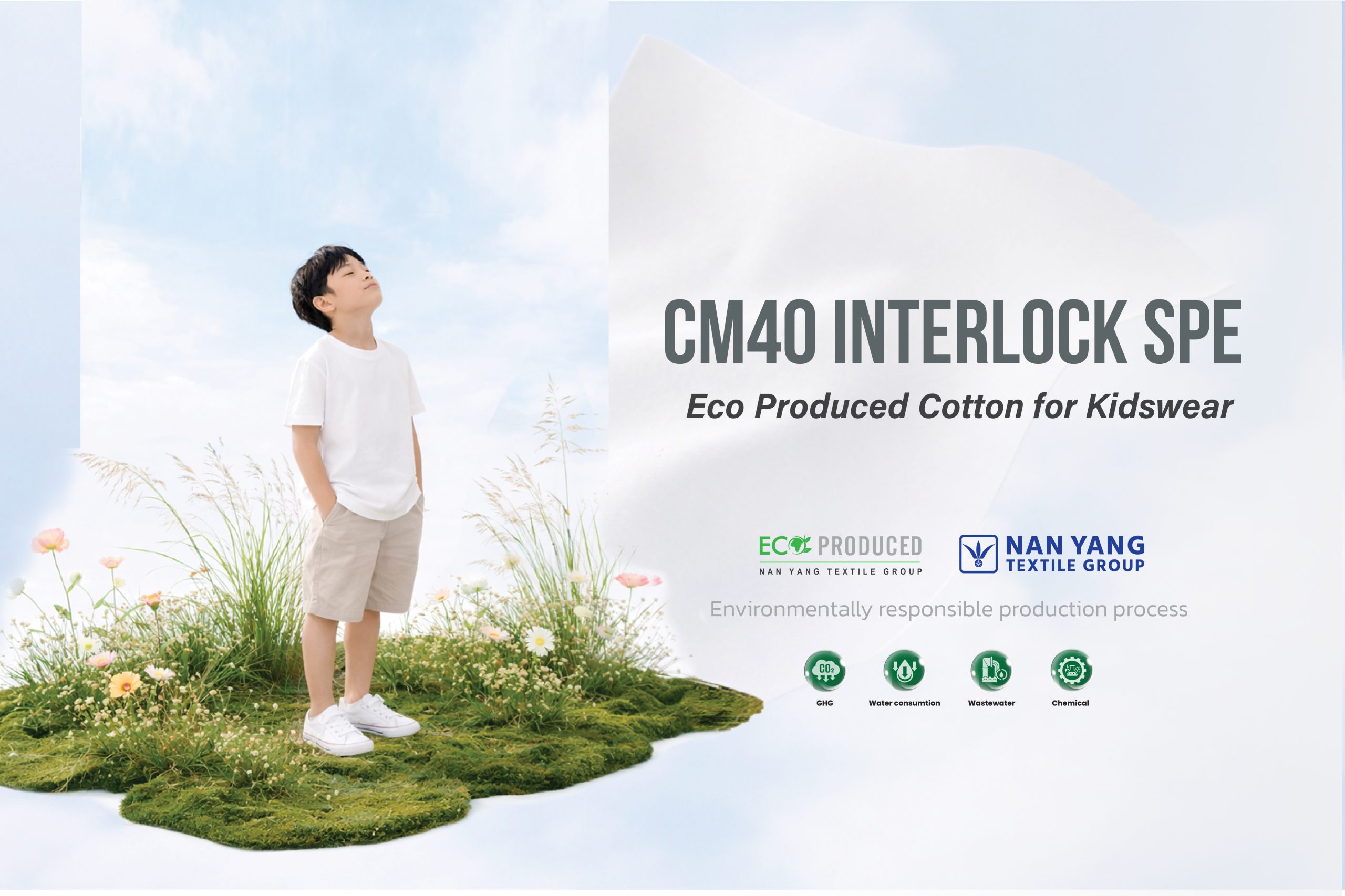
27 Mar Eco Produced Cotton for Kidswear
Good kidswear should be safe for children and better for the environment. That is why the production process matters just as much as fabric quality. Eco Produced Cotton is a textile production approach that focuses on every step from upstream to downstream, helping reduce greenhouse gas emissions, maintain quality control, and build confidence in the kidswear industry. It supports brands, business owners, and buyers who are looking for high-quality fabric to develop comfortable, safe, and practical children’s clothing for long-term use.
What Is Eco Produced in the Textile Industry?
Fully Integrated Production with End-to-End Control
In the textile industry, Eco Produced refers to a production concept that looks at fabric quality. It is not only about how soft or attractive the fabric feels at the end, but also about controlling every stage of production, from raw material selection and manufacturing systems to quality control, resource management, and environmental impact.
This makes it especially suitable for developing fabric for kidswear, because the children’s apparel market requires a higher level of trust and consistency. When brands are searching for Eco Produced Cotton for kidswear, they are not only looking for soft cotton fabric. They are also looking for a reliable production system that can deliver fabric ready for real industrial use. If the supplier is both a fabric manufacturer and can connect with a garment factory or OEM clothing manufacturer, product development becomes far more efficient because every step works together in one integrated system.
Reducing GHG Emissions in the Production Process
One of the key pillars of Eco Produced is the reduction of greenhouse gas (GHG) emissions during textile manufacturing. This has become increasingly important for modern brands and consumers, who now evaluate not only price and fabric quality, but also how production affects the environment.
For the kidswear market, this matters even more. Parents increasingly prefer products that are good for both their children and the planet. Choosing Eco Produced Cotton for kidswear allows brands to communicate stronger value by showing that they care not only about comfort and softness, but also about the world children will grow up in.
Energy and Resource Management
Textile production uses energy, water, and many other resources. Without proper management, these processes can create unnecessary environmental impact and hidden costs. Eco Produced therefore emphasizes efficient resource use to reduce waste and create a more balanced production system.
For businesses developing kidswear fabric, this brings real benefits. A controlled and systematic production process usually leads to more consistent fabric quality, making it suitable for actual product development. This is especially important for brands that want to create premium-quality products, whether under their own label or through OEM clothing production.
How It Differs from Conventional Fabric Production
What makes Eco Produced different from conventional textile manufacturing is that fabric is not treated as just a product. Instead, it is the outcome of a more thoughtful and complete system. Conventional fabrics may meet basic needs in terms of price and function, but Eco Produced Cotton for kidswear offers deeper value in terms of reliable quality, brand image, and readiness for ongoing commercial production.
If you are a brand looking for fabric for children’s clothing or choosing a garment manufacturer for long-term kidswear development, this difference can have a major impact on your brand credibility and market competitiveness.
Why the Production Process Matters for Kidswear
Lower Risk of Harmful Residue
Children’s skin is more delicate and sensitive than adult skin. That makes fabric selection and textile processing extremely important. If production is not properly controlled, concerns may arise about residue, fabric safety, and overall product quality, directly affecting parental confidence.
This is why Eco Produced Cotton for kidswear is an attractive option. It is not simply cotton fabric. It is cotton developed within a system that prioritizes safety and standards suitable for real use in children’s apparel.
Safer Dyeing Processes
Dyeing is another critical step that affects both fabric quality and the overall value of the finished product. In the children’s clothing market, buyers do not look only at bright and beautiful colors. They also care whether the dyeing process is safe and trustworthy.
For brands that want to create high-quality kidswear, selecting kidswear fabric produced under an Eco Produced system adds strength to the brand story. It allows the brand to explain the value behind the product more clearly and persuasively.
Better Quality Control Standards
Good kidswear should not be high quality only in some production runs. It should maintain consistent quality over time. This product category depends heavily on parental trust, so inconsistent fabric quality can affect sewing performance, customer satisfaction, and the brand’s long-term reputation.
That is why a fabric mill with a strong system, or a garment factory working with a quality textile source, has a major advantage in this market. This is especially true when developing Eco Produced Cotton for kidswear for commercial-scale production.
Greater Confidence for Parents
In the end, parents are the main buyers of kidswear. They care about softness, comfort, safety, and brand reliability. Good fabric alone may not be enough. A trustworthy production story and dependable manufacturing system are also essential.
Brands using Eco Produced Cotton for kidswear therefore have a clear advantage. They can communicate both the quality of the fabric and the integrity of the production process, creating a stronger point of difference from ordinary brands.
How Eco Produced Cotton Differs from Regular Cotton
Raw Material Control
Regular cotton is often chosen because it is familiar, breathable, and comfortable. But Eco Produced Cotton for kidswear stands out because of its more structured approach to raw material control. Better raw material management helps ensure more consistent fabric quality and makes the material better suited for real product development at the level brands require.
For businesses looking for a fabric supplier or searching for the right fabric for kidswear, choosing fabric with clear upstream control helps make product development easier and reduces long-term risk.
Manufacturing Standards
Another major difference lies in manufacturing standards. Standard cotton may meet only basic usage needs, while Eco Produced Cotton for kidswear is developed for a market that expects higher standards in quality, communication, and readiness for branded product development.
If you are choosing a garment factory or an OEM clothing manufacturer, working with fabric built on strong production standards can help create a much stronger product foundation.
Water Resource Efficiency
Water is one of the most important resources in the textile industry. Eco Produced manufacturing places greater emphasis on using water more efficiently, which matters to both modern brands and consumers because it connects directly to environmental responsibility and business sustainability.
For the kidswear market, this gives brands a stronger story. They are not only selling a product. They are also selling a way of thinking and a set of values behind that product.
Consistent Quality
Consistency is one of the foundations of a strong and sustainable brand, especially in the children’s clothing market where customers expect high standards in comfort, function, and fabric quality. Eco Produced manufacturing offers an advantage because it is better able to maintain consistent quality that supports real production use.
For anyone looking for fabric for kidswear, or for businesses developing products with a textile manufacturer and garment factory, this consistency is a significant competitive advantage.
What Are the Advantages of a Fully Integrated Garment Factory?
Quality Control at Every Stage
A fully integrated garment factory has the advantage of being able to manage quality closely at every step, from fabric selection and performance testing to sewing and final delivery. This reduces errors and minimizes the risk that comes from outsourcing too many stages to separate parties.
For developing Eco Produced Cotton for kidswear, an integrated system is especially important because it ensures that both the fabric and the finished garments remain under the same quality standards. That gives brands more confidence when building serious product lines.
Lower Supply Chain Risk
The longer and more fragmented the supply chain, the greater the risk in terms of lead time, quality, and communication. A fully integrated manufacturing setup helps reduce these risks significantly, especially when producing kidswear that requires consistent standards.
From a brand perspective, working with a garment manufacturer that understands fabric, understands the children’s apparel market, and can coordinate effectively with a fabric manufacturer makes product development faster and more accurate.
More Precise Cost Control
Effective cost control does not always mean choosing the cheapest option. It means managing costs efficiently, predicting expenses accurately, and avoiding hidden losses caused by quality issues later on. An integrated factory has a strong advantage here because it can plan production more precisely.
For brands working with an OEM clothing manufacturer or building their own kidswear line, a structured system that supports cost control makes brand expansion more stable and manageable.
Traceability
Traceability has become increasingly important in modern markets where transparency matters. This is especially true in the category of fabric for children’s clothing, where end customers want a high level of confidence. If a brand can clearly explain where the fabric comes from, how it is produced, and which standards it meets, that can greatly strengthen consumer trust.
Why Is It Suitable for OEM Kidswear Production?
Ideal for Brands Focused on Quality and Safety
In today’s OEM clothing manufacturing market, brands do not only care whether a supplier can produce garments. They want a partner who can help build a strong product foundation. That is why Eco Produced Cotton for kidswear is such a strong choice for brands that want to position themselves in the premium-quality segment. It clearly supports messaging around comfort, safety, and responsible production.
Adds Value to the Product
As children’s products become more competitive, a clear selling point becomes more important than ever. Using kidswear fabric built on an Eco Produced concept can increase product value in both real quality and customer perception. It gives the product a stronger sense of standard, substance, and story.
Builds Market Credibility
Brands that can explain what fabric they use, who they develop with, and what standards support their products tend to earn more trust than brands that talk only about design or price. Using Eco Produced Cotton for kidswear strengthens credibility in both B2B and B2C markets.
This is especially true when working with a garment factory, fabric mill, or a team that provides fabric development and OEM clothing manufacturing with a genuine understanding of the kidswear category.
Supports Scalable Production
As brands grow, they face the challenge of repeat production and increased order volume. That requires a fabric system and manufacturing process capable of delivering consistent quality. Using Eco Produced Cotton for kidswear within a well-structured production system helps brands scale more confidently, reduce the risk of quality variation, and plan long-term growth more effectively.
Nan Yang Textile Group Certifications and Standards
Environmental Management System (ISO 14001)
ISO 14001 is an important standard that reflects a systematic approach to environmental management. It helps build confidence that production does not focus only on business efficiency, but also on environmental impact. This is strongly aligned with the concept of Eco Produced Cotton for kidswear.
Quality Management System (ISO 9001)
ISO 9001 is the foundation of quality management in manufacturing organizations. A strong quality system helps ensure that both textile production and garment manufacturing are standardized, reducing inconsistency and giving confidence to customers and brands looking for high-quality fabric for kidswear.
Occupational Health and Safety Management (ISO 45001)
This standard reflects a serious commitment to workplace health and safety. It is another important marker of corporate responsibility and can significantly influence long-term trust from business partners.
OEKO-TEX Standard 100
OEKO-TEX Standard 100 is one of the best-known textile standards in global markets, especially for products related to children. It helps increase confidence in the suitability of textile products for real use and is a major factor in making children’s clothing appear more trustworthy to consumers.
ZDHC (Zero Discharge of Hazardous Chemicals)
ZDHC reflects a commitment to responsible chemical management in textile production. This is highly important in the modern textile industry because it is connected to environmental performance, product quality, and corporate responsibility. Having this kind of framework strengthens the overall value of Eco Produced Cotton for kidswear.
Higg Index
The Higg Index is a tool used to assess sustainability performance in the textile industry. A framework like this helps brands and business partners gain a clearer view of sustainability readiness and supports better decision-making when choosing a fabric manufacturer or garment factory.
If you are looking for Eco Produced fabric for kidswear, Nan Yang Textile Group is the right choice. From upstream to downstream, every stage is developed and controlled by the original expert team behind the innovation, ensuring fabric that is truly ready for real-world application at every step. For more information,
contact us or click